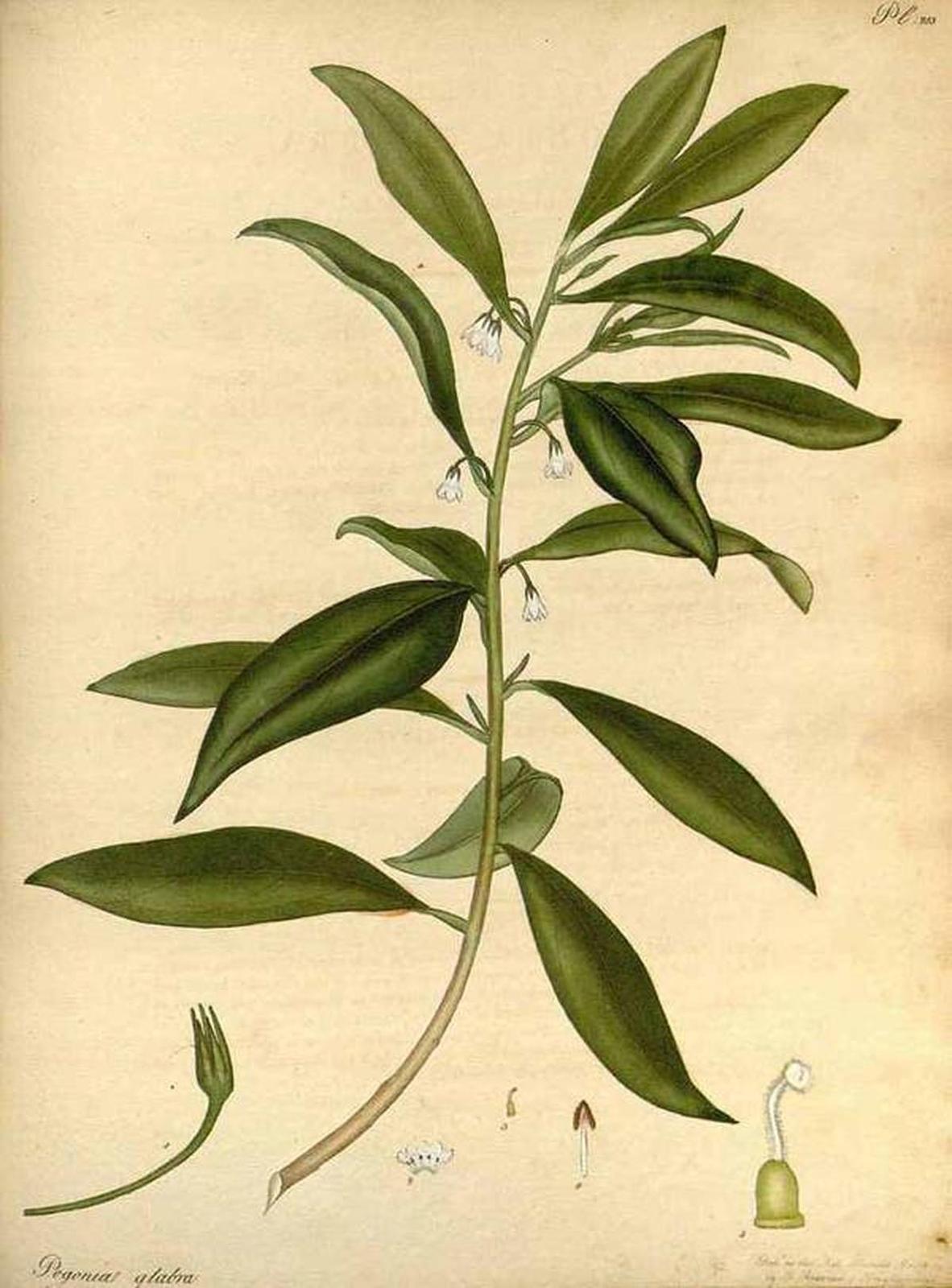
Imagen: H.C. Andrews (1802-1803). Missouri Botanical Garden, St. Louis
Myoporum tenuifolium G.Forst.
ScrophulariaceaeDe origen australiano, su nombre genérico alude a las glándulas foliares, pues se compone de myo, encerrar en griego, y poros, poro. El epíteto específico alude a la delgadez de sus hojas, si se las compara con las de otras especies del género que tiene hojas crasas. También conocido como Siempreverde y Miosporo procede de Nueva Zelanda, hallándose en España en zonas de clima cálido o suave al borde de caminos y baldíos del litoral. En jardinería se cultiva como planta ornamental o para formar setos sustituyendo al aligustre. Así aparece en el Alcázar, concluyendo el jardín del Marqués de la Vega Inclán en su límite con los jardines de Murillo, espacio que antaño también perteneció a este palacio.
Procedencia
OceaníaCalendario
Hábitat
Morfología
Tipo
 Arbusto
Arbusto
Porte
 Ovoidal
h: 2 a 3m
r: 0,20
Ovoidal
Hoja
 Simple
Simple
Lámina
 Lanceolada
Lanceolada
Disposición
 Alterna
Alterna
Margen
 Entero
Entero
Base y peciolo
 Atenuada
Atenuada
Ápice
 Acuminado
Acuminado
Ápice
 Agudo
Agudo
Agudo
Follaje
 Perenne
Perenne